ZEBRA
SAFE
CITIES
An innovative Zambian public policy model integrating road safety, women's economic empowerment and community policing — creating safer streets and well-managed junctions while generating dignified employment for women from disadvantaged communities.
Lusaka City Council · RTSA · Zambia Police · iRAP
A Silent Public
Health Crisis.
Sub-Saharan Africa records the world's highest road traffic fatality rate. In Zambia alone, over 3,300 lives are lost every year on the road, and pedestrians at unmanaged urban junctions are among the most exposed. In fast-growing Lusaka, infrastructure has not kept pace with urbanisation.
At the same time, unemployment among young women in low-income neighbourhoods remains structurally high, limiting their access to formal, dignified work. Two crises — road safety and economic exclusion — that a single, well-designed public policy can address.
ZEBRA Safe Cities is that policy: an integrated, scalable and government-aligned model that turns junctions into places of protection and opportunity.
Road accidents in Lusaka disproportionately impact pedestrians, particularly at unmanaged urban junctions and market areas.
Most junctions lack zebra crossings, yellow box markings, or any visible traffic management systems.
Women, children, and informal traders bear the heaviest burden of unsafe road conditions in urban Lusaka.
Structural unemployment among young women from disadvantaged communities limits access to dignified formal work — a gap the ZEBRA model closes.
Three Pillars.
One Public Policy.
- Yellow box junction markings
- Zebra crossings at priority sites
- Reflective road signage
- Reinforced pedestrian crossings
- Solar street lighting (phase 2)
- Recruitment & certified training of women wardens
- Certified traffic warden training
- Women's safety helpline (phase 2)
- Long-term employment pathways
- Ward Development Committee coordination
- Public road safety awareness campaigns
- Community-led site prioritization
- Digital incident reporting (phase 2)
- Local leader engagement
Addis Ababa Drive.
Where It Begins.
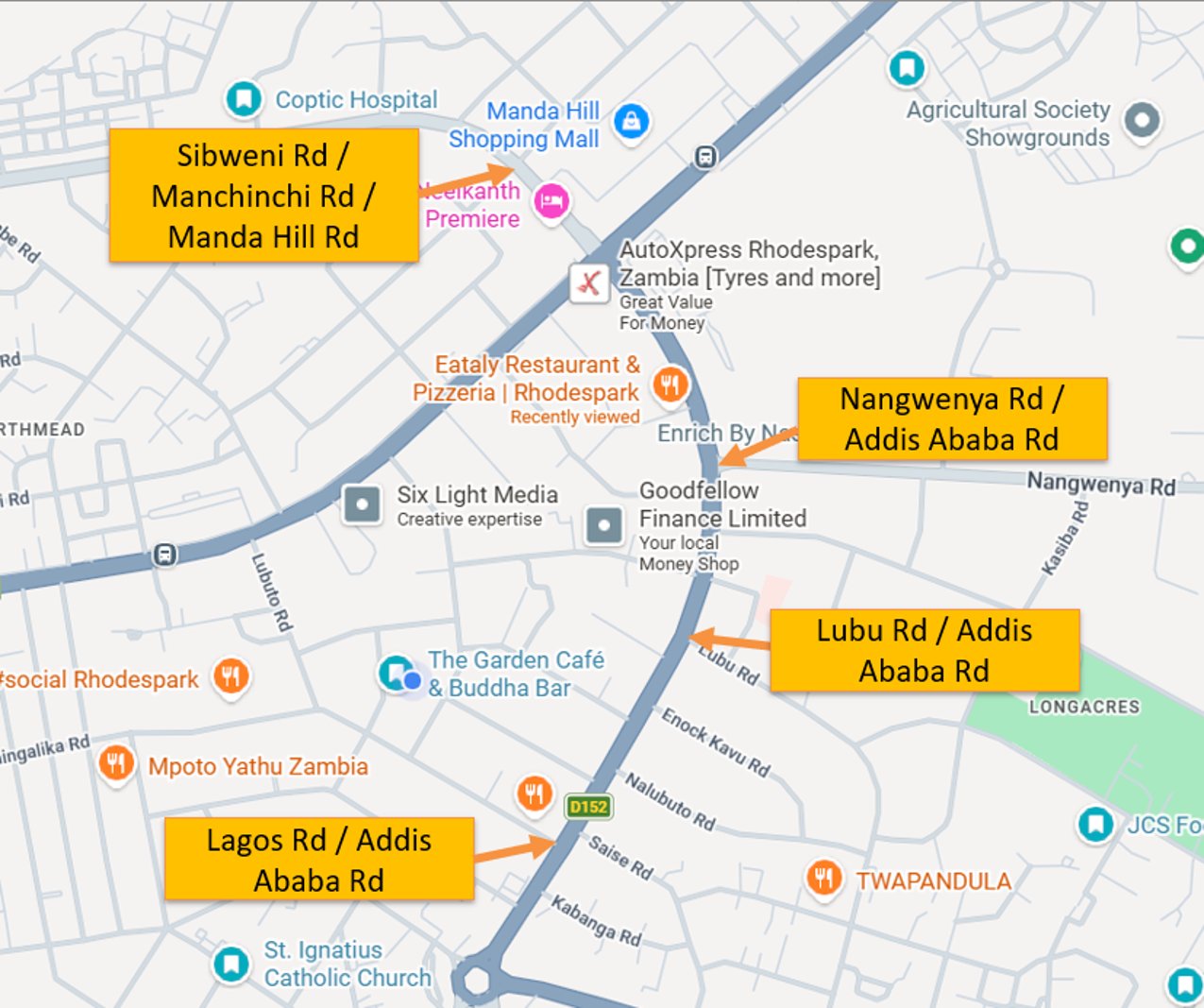
The Addis Ababa Drive Pilot
The first ZEBRA Safe Cities deployment focuses on four priority junctions along Addis Ababa Drive in Lusaka: Sibweni / Manchinchi / Manda Hill Rd, Nangwenya Rd / Addis Ababa Rd, Lubu Rd / Addis Ababa Rd, and Lagos Rd / Addis Ababa Rd.
At each junction we deploy Female Traffic Wardens whose primary role is to enforce respect for the yellow box — keeping intersections clear, orderly and safe. Road awareness signage is installed in full compliance with RTSA regulations. The pilot is designed to scale up to full zebra crossings and additional corridors across Lusaka.
What Is a Yellow Box Junction?
A yellow box junction is a road-marking — a yellow criss-crossed square painted at an intersection — that drivers must keep clear at all times unless their exit is unobstructed. Its purpose is to prevent gridlock, protect pedestrians and keep emergency access open.
According to the Road Transport & Safety Agency (RTSA) of Zambia, yellow box markings are a recognised traffic-control device: no driver may enter a yellow box unless their onward path is clear, and stopping inside it constitutes a traffic offence. Enforcing yellow boxes is one of the most cost-effective interventions to reduce junction congestion and pedestrian risk.
Source: Road Transport & Safety Agency (RTSA), Republic of Zambia.
The Warden's Role
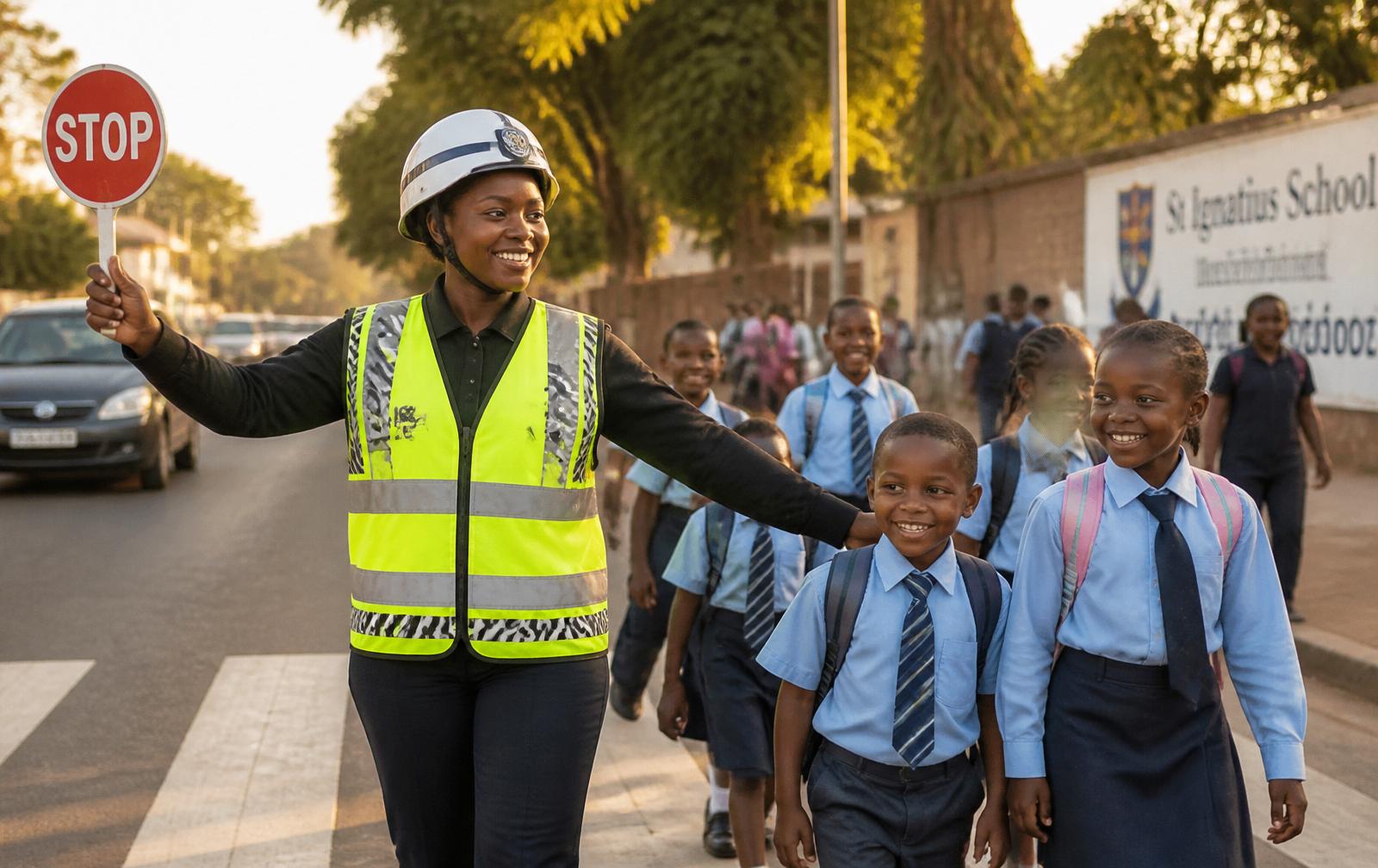
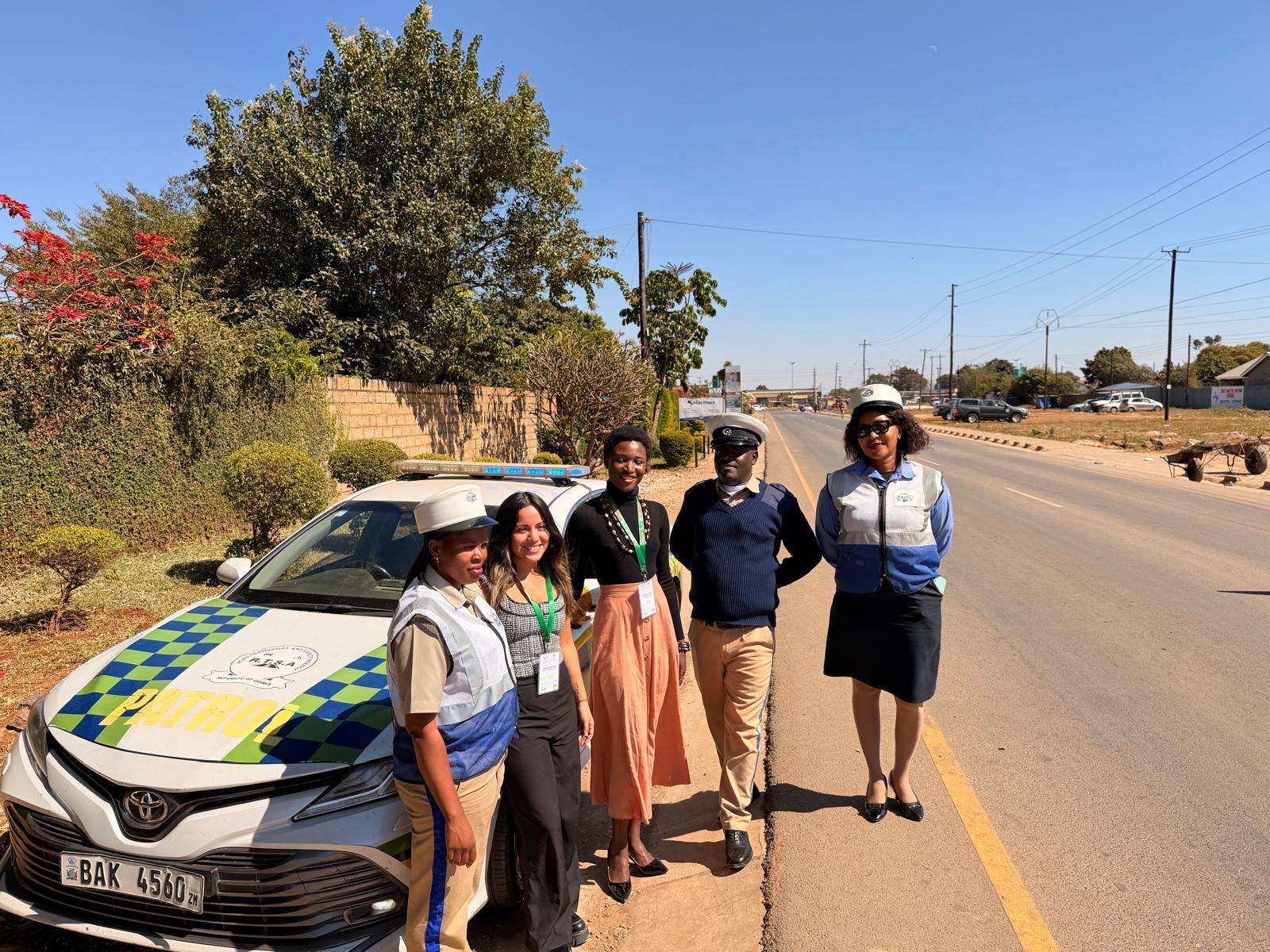
ZEBRA Female Traffic Wardens are stationed at each pilot junction to ensure drivers respect the yellow box — guiding traffic, signalling to motorists, and supporting the Zambia Police and RTSA in real-time enforcement. Their presence transforms a passive road marking into an actively managed safety zone.
Core Interventions
Trained and certified women deployed at pilot junctions to enforce respect for the yellow box, manage traffic flow and support Zambia Police and RTSA in daily operations.
Planned scale-up intervention: from yellow-box enforcement to full zebra crossings at priority urban locations, giving pedestrians a safe, designated passage.
The core pilot intervention: high-visibility yellow-box markings and RTSA-compliant road awareness signage at each priority intersection, actively enforced by Female Traffic Wardens.
Community-facing campaigns that educate drivers, pedestrians, and traders on road safety rules and shared responsibility.
Phase 2 Add-Ons
Pilot Funding Model
The pilot is funded exclusively through Public-Private Partnerships (PPP) in exchange for corporate visibility — the model currently on offer to our Elephant Partners.
Why Zebra Is Different
- Nationally scalable model from day one
- Women-led at every operational level
- ESG-aligned for corporate sponsorship
- Institutionally backed by RTSA & LCC
Building Safer Roads
and Stronger Communities.
Road crashes have a devastating human and economic impact. Evidence from the International Road Assessment Programme (iRAP) highlights the urgent need for investment in safer roads — and demonstrates the significant lives and economic value that can be protected through cost-effective road safety interventions.
Road Safety in Zambia: The Current Challenge
The Impact of Safer Roads Investment
Achieving safer road targets requires strategic investment in infrastructure, road design and evidence-based interventions. Low-cost and effective safety measures can generate significant social and economic returns.
Annual economic benefit at target: USD 326.6 million.
Progress Towards Global Road Safety Targets
These figures demonstrate the transformative potential of investing in safer road systems and reinforce the importance of scalable, evidence-based interventions.
Measuring Impact: The ZEBRA Framework
ZEBRA Safe Cities measures its impact along five evidence-based dimensions, designed for evaluation by governments, multilaterals and research institutions.
- Women trained as Female Traffic Wardens
- Women employed through the program
- Employment retention & professional development
- Economic independence outcomes
- Residents benefiting along pilot corridor
- Communities reached
- Pedestrian safety improvements
- Community perception of safety
- Improved pedestrian visibility
- Road user behaviour changes
- Reduction of traffic conflicts
- Safer junction environments
- Community participation
- Collaboration with public institutions
- Police coordination & capacity building
- Ward Development Committee engagement
- Cost-effectiveness analysis
- Replication potential
- Data collection & evaluation
- Lessons learned & policy uptake
Sources: iRAP Safety Insights Explorer; Road Transport & Safety Agency (RTSA), Zambia.
Women at the Heart
of Safer Streets.

Every Warden Is a Public Policy in Motion.
ZEBRA wardens are young Zambian women from disadvantaged communities, recruited, trained and certified in traffic management, first aid and community engagement in partnership with the Road Transport & Safety Agency and the Zambia Police.
Each deployment converts a dangerous junction into a well-managed intersection — and a formal, dignified job into a pathway out of poverty. Every warden is a visible symbol of institutional care, community policing and women's economic inclusion.
From Pilot to Policy.
- Site assessments at priority junctions
- Partnership formalization with RTSA, LCC & Zambia Police
- Recruitment of 15 female wardens
- Traffic warden certification program
- Junction marking installation
- Warden deployment at 4–10 sites
- Public awareness campaigns launch
- Impact measurement & data collection
- RTSA data integration
- National replication model
Who We Work With
Elephant Partners.
Partner With Us.
Partner with a government-backed, women-led Zambian model at the intersection of road safety, women's empowerment and community policing. Our Elephant Partnership is aligned with the UN Sustainable Development Goals and designed for governments, foundations, corporates and international donors.
- Named corridor or junction sponsorship
- Co-branded road safety awareness campaigns
- Warden uniform & equipment branding
- Quarterly ESG & impact reporting
- Recognition at government & community events
- Alignment with UN SDG 3, 5, 8, 11 & 16
JOIN THE
MOVEMENT
Governments, international organisations, donors, universities, foundations and corporates — join us in building the Zambian blueprint for safer, more inclusive African cities.